What if your memory could outlive you? Digital legacy and the future of AI
Every day, a lifetime of knowledge is lost when someone passes away. What if your memories, wisdom and voice could keep helping the people you love — with your permission? Why a personal AI memory may be the most human part of the AI revolution.
By The Infinite Memory team · · 7 min read
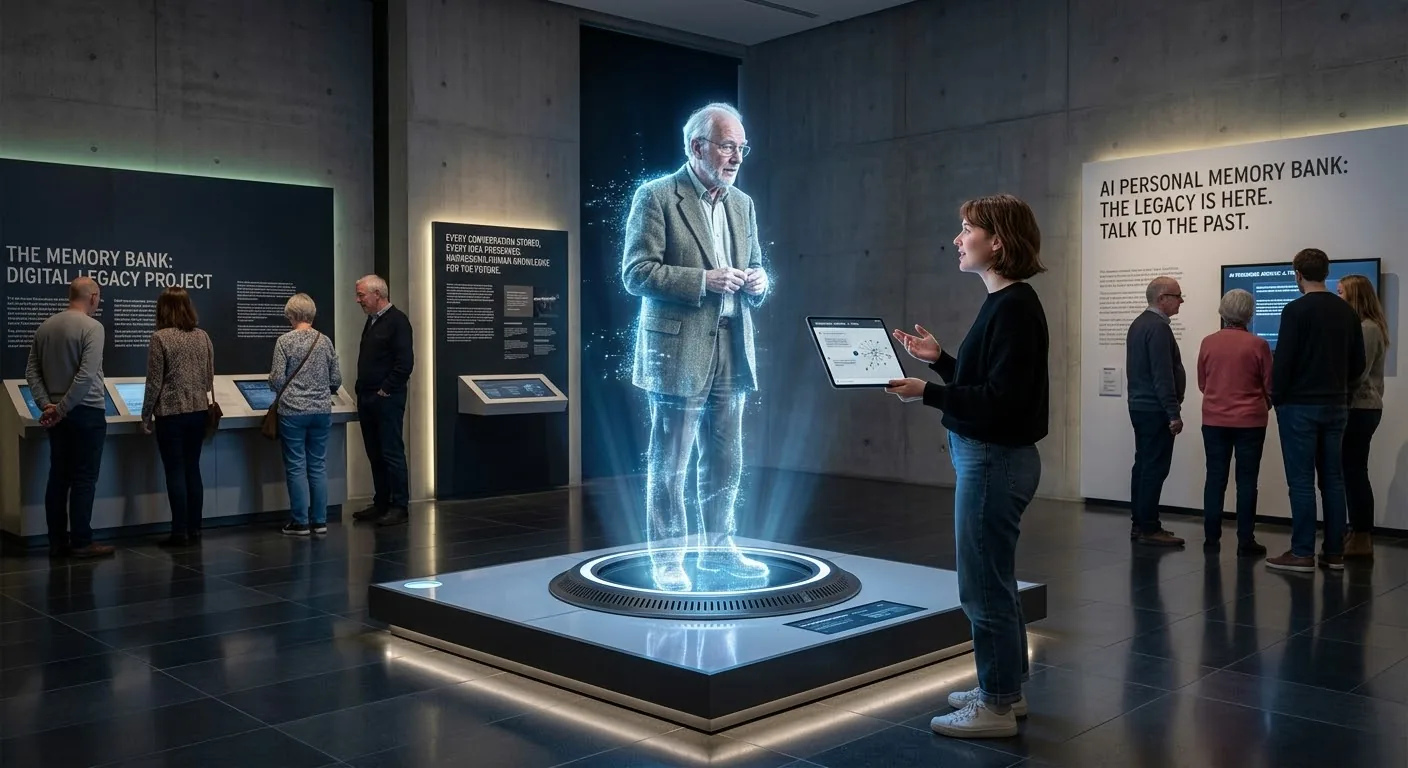
There is an old saying, often attributed to the Malian writer Amadou Hampâté Bâ: when an elder dies, a library burns.
Think about what that library holds. Your grandmother's recipes and the stories behind them. The way your father solved problems at work. The advice a teacher gave a thousand students. A founder's hard-won lessons. A doctor's instinct built over forty years. Most of it was never written down. It lived in conversations — and when the person was gone, so was the library.
For all of human history, that loss has been unavoidable. It may not be for much longer.
The question no one could ask before
What if the important things you've thought, learned and decided didn't disappear with you?
What if, years from now, your granddaughter could ask "What would Grandpa have said about starting my own business?" — and hear an answer drawn from the things you actually said, in your own words, with your permission?
What if the knowledge of a great teacher, scientist or craftsperson could keep answering questions for the next generation, instead of fading with them?
This is the idea behind digital legacy: preserving a person's memories, knowledge and voice so they can keep serving the people who come after them. For the first time, the technology to do it well is within reach — and it's one of the reasons we're building Infinite Memory.
Let's be honest about consciousness
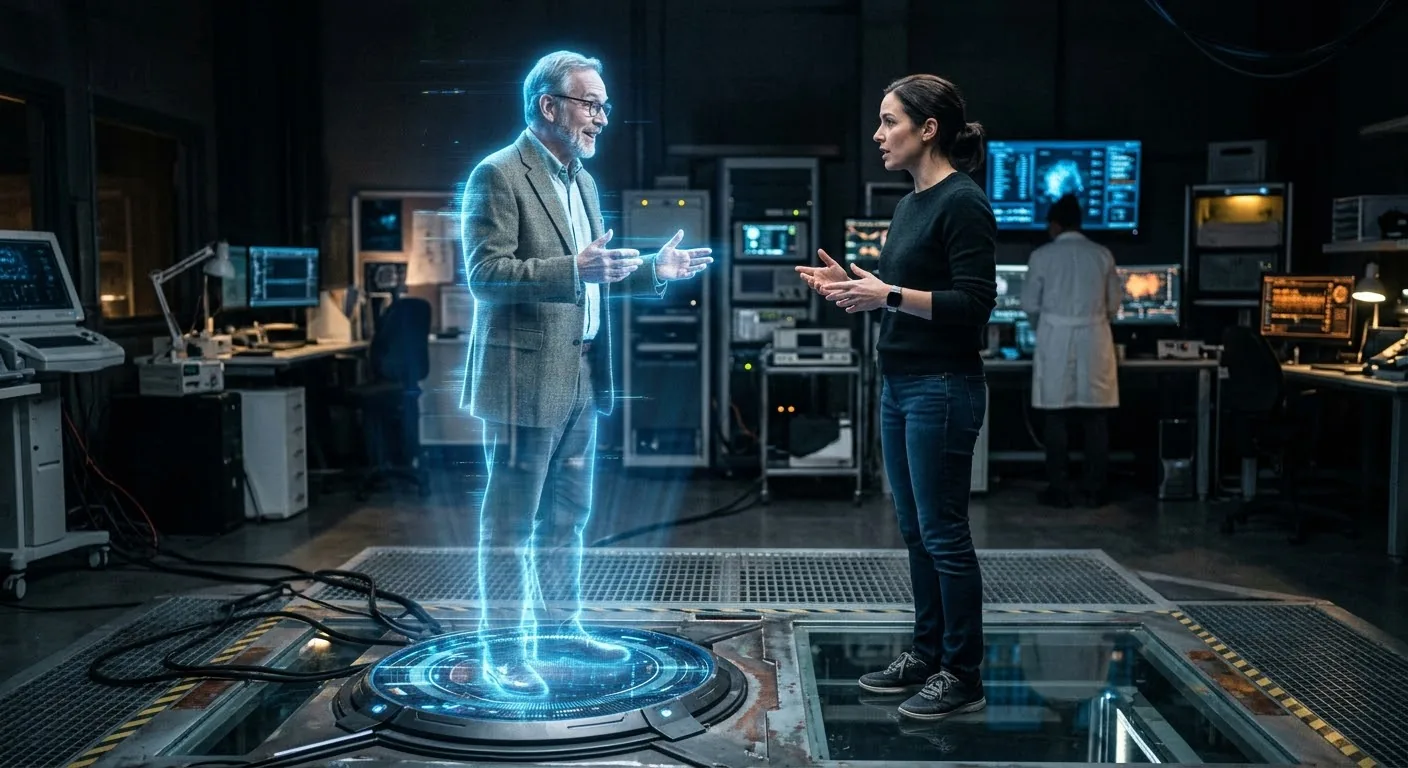
Before going further, an important truth. No technology today can preserve a person's consciousness. Science doesn't know how to copy a mind, and anyone who claims otherwise is selling something.
What can be preserved is something still remarkable: the record of what a person shared, believed, decided and learned — their memories, their knowledge, their stories and their way of explaining things. An AI can draw on that record to answer questions the way they might have, clearly labelled as exactly that: an AI speaking from their memories, not the person themselves.
That distinction matters, and we'll never blur it. A legacy built on honesty is worth more than an illusion.
Why this is possible now
Three things changed at once.
- We now talk to AI about everything. Every day, people tell ChatGPT, Claude, Gemini and other assistants about their goals, decisions, ideas, worries and plans. Without meaning to, we are writing the most detailed record of our thinking that has ever existed.
- AI can finally understand that record. Modern AI can read years of conversations and find what matters — the decisions, the lessons, the values — not just store words.
- Personal AI memory now exists. Infinite Memory is built to turn those scattered conversations into one lasting memory that belongs to you, where every memory shows exactly where it came from.
Put those together and a lifetime of knowledge no longer has to burn with the library.
How Infinite Memory could carry your legacy forward
Infinite Memory starts with something simple and useful today: one private memory for everything you've shared with AI. You bring in conversations from any AI app, keep what matters, and ask your memory questions — always with sources.
Over a lifetime, that memory becomes something extraordinary: a record of who you are, how your thinking changed, and what you learned along the way. Our long-term vision is to let you decide what happens to it next.
- Choose your legacy, while you're here. You decide whether your memory should continue at all — and if so, which parts. Your values, your life lessons, your professional knowledge, your family stories. Private memories stay private.
- Choose who can ask. Your children, your grandchildren, your students, your team — or no one. You can name people you trust to look after your memory, the way you would name an executor.
- Answers grounded in your own words. When someone asks a question, the answer comes from what you actually said, with the source shown — never invented opinions put in your mouth.
- Always clearly an AI. Everyone talking to a legacy memory knows it is an AI drawing on your memories. No pretending, no deception.
- Your family keeps control. The people you trust can pause, limit or delete the memory at any time.
The goal isn't to replace anyone. It's to make sure what you knew can keep helping the people you love.
The bigger picture: memory that serves humanity
The same idea reaches far beyond families.
- Knowledge that would otherwise be lost. Retiring engineers, doctors, farmers and craftspeople carry knowledge that no manual captures. With their permission, it could keep teaching.
- Mentors for everyone. Imagine asking a question of the preserved knowledge of a great teacher or scientist — with sources — long after they've gone.
- History in people's own words. Future historians could learn about our era not from summaries, but from the decisions and reasoning of the people who lived it, shared by choice.
- Communities and cultures. Languages, traditions and oral histories that are disappearing could be preserved by the people who hold them, on their own terms.
Every generation has had to start again. A world with permissioned, honest personal memory could be the first where hard-won wisdom accumulates instead of disappearing.
Why memory is the next AI revolution
The first chapter of the AI revolution was about intelligence: models that can write, reason and answer almost anything. That chapter is moving fast — and models will keep changing, every few months, for the rest of our lives.
The next chapter is about memory. Intelligence without memory forgets you the moment you close the window. Memory is what turns a clever tool into something that knows you, grows with you, and — one day — can carry your knowledge forward.
That memory shouldn't belong to whichever AI company you happen to use this year. It should belong to you: portable across every AI, transparent about where each memory came from, and under your control — in life and beyond it.
That's what Infinite Memory is building. Your memory. Every AI. Today, it means you never lose what matters. Tomorrow, it may mean the people you love never lose you entirely.
The principles we won't compromise on
A legacy is the most personal thing a person can leave. So digital legacy must be built with more care than anything else in technology:
- Consent first. Nothing continues after you're gone unless you chose it while you were here.
- Truth over illusion. It is always clear that you're speaking with an AI drawing on someone's memories — never the person.
- Grounded, never invented. Answers come from what the person actually said, with sources.
- Privacy by default. Sensitive memories are excluded unless you explicitly include them.
- Control for the living. Trusted people can pause, limit or delete a legacy memory at any time.
- Never for deception. A person's memory must never be used to impersonate them, scam others or speak for them on matters they never addressed.
Start your memory today
Every legacy starts with a single memory. The conversations you have with AI today — your plans, your lessons, your ideas — are worth keeping, for you now and perhaps for others one day.
Start your memory with Infinite Memory → It's free during early access, and it takes less than a minute to save your first conversation.
Legacy features are part of Infinite Memory's long-term vision and are not available yet. Today, Infinite Memory is your private memory for what you've shared with AI.
Frequently asked questions
Can AI preserve a person's consciousness after death?
No. No current technology can preserve or copy consciousness. What can be preserved is a person's memories, knowledge and way of explaining things, which an AI can draw on to answer questions — clearly as an AI, not as the person.
What is a digital legacy?
A digital legacy is what a person leaves behind in digital form. With personal AI memory, it can include the knowledge, stories, values and lessons someone chose to preserve, so their family or community can keep learning from them.
Will I be able to talk to a loved one's memories with Infinite Memory?
That is part of our long-term vision and is not available today. If and when we build it, it will only work with the person's own consent given during their lifetime, it will always be clear you are talking to an AI drawing on their memories, and trusted family members will stay in control.
How is this different from an AI chatbot that imitates someone?
Imitation chatbots invent answers in someone's style. A legacy memory built on Infinite Memory would answer from what the person actually said, show the source, admit when it doesn't know, and only exist if the person chose it.
Is my memory private?
Yes. Your Infinite Memory is private to you, encrypted, and never sold or used to train AI. You can export, archive, forget or delete anything at any time.
How can I start preserving my knowledge today?
Start by saving the conversations you have with AI. Copy a chat from ChatGPT, Claude, Gemini or any AI into Infinite Memory, keep what matters, and your memory grows from there.